You have found the price. It is noticeably lower than everything else you have looked at, and now you are doing the thing everyone does: half pleased, half suspicious, wondering whether you have been clever or are about to be caught out.
Here is a more useful way to hold it. A price is information, not proof, and a low number is genuinely not always a bad one. But every session of Morpheus8 sits on a fixed set of costs, and when a price lands a long way below what the rest of the market charges, something in that structure has given way. Every likely candidate is something you can simply ask about. None of the questions are rude, and a clinic worth booking answers them happily.
First, what does Morpheus8 actually cost in the UK?
These are the observed ranges from UK clinic websites, captured during research in 2026. Prices move constantly, so read this as a snapshot rather than a scale.
| Treatment area | Single session | Course of 3 |
|---|---|---|
| Eye area | £399 to £625 | £945 to £1,450 |
| Full face | £500 to £1,580 | £1,650 to £2,200 |
| Face and neck | £620 to £1,250 | £1,750 to £3,000 |
| Neck or chin alone | £200 to £400 | £560 to £1,120 |
| Body, abdomen and similar | £300 to £1,800 | £840 to £3,240 |
Taken together, that is roughly £200 to £1,800 per session and £560 to £3,240 for a course of 3, depending on area, clinic and operator seniority. One London provider characterises the market as running from roughly £400 at budget clinics to £900 to £2,200 at premium London clinics.
Notice where the floor is. £200 is the lowest published single-session price in that table, and it buys a chin, not a face. So the first thing to establish about a cheap-looking quote is not whether it is low, but what area it covers.
Two caveats belong next to that table. First, almost every named price point behind it is a London clinic, plus one generic UK figure, so there is no published Midlands benchmark to hold a local quote against. That gap is why published prices say so little about where you live.
Second, package prices are almost always for 3 sessions unless noted, and almost always is not always. One published body package of £3,835 covers 6 sessions, and misreading a figure like that is the most common way two quotes get compared wrongly.
Why the cheapest and the priciest session sit in the same city
A single detail explains most of the spread, and clinics rarely volunteer it. One London clinic charges £1,050 for a full face with a Senior Doctor and £1,580 for a full face with a Lead Doctor. Same clinic, same treatment, same room. The difference is who is holding the handpiece, and across the market price is driven substantially by exactly that.
So a very low price is often telling you something true rather than something dishonest: a less senior practitioner, a smaller area, lower overheads than a Knightsbridge address. That is fine, and it is information you would rather have before you book than after.
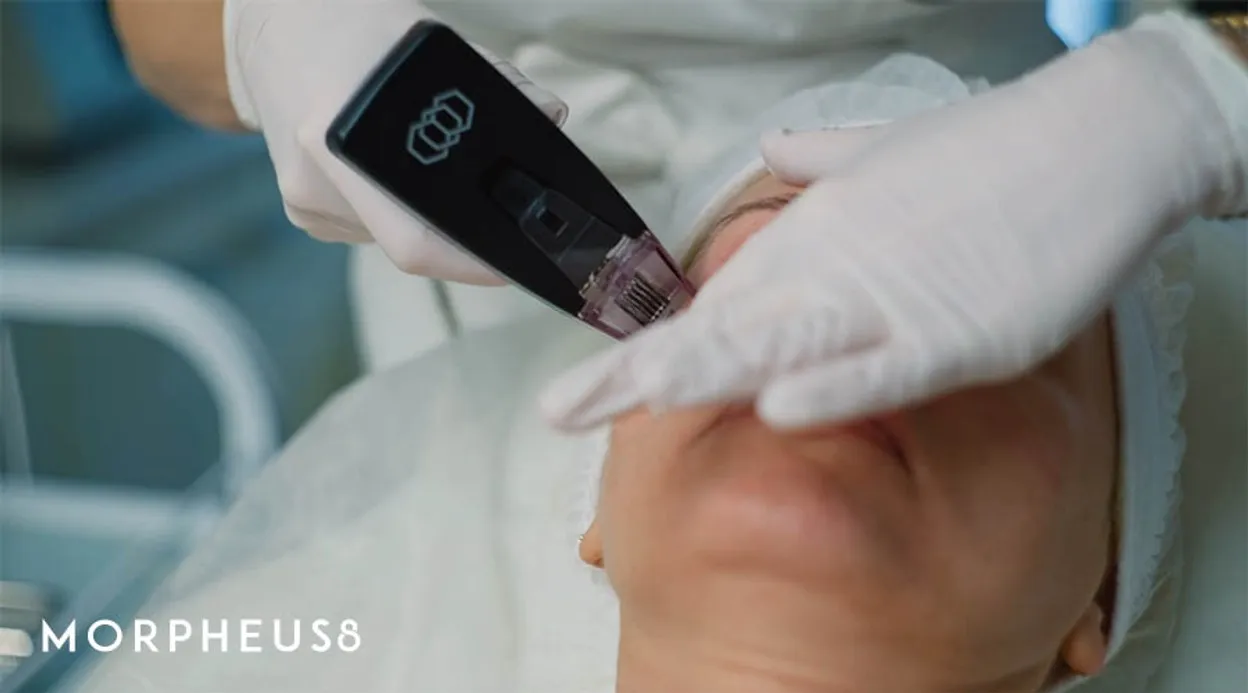
Who is holding the handpiece, and what are they qualified in?
Short answer, in England today: nobody is obliged to tell you, because nothing obliges them.
There is currently no national licensing scheme in force for non-surgical cosmetic procedures in England. The powers to create one exist under section 180 of the Health and Care Act 2022, and the Government consulted between 2 September and 28 October 2023, receiving over 11,800 responses. The proposed scheme sorts procedures into green, amber and red. Microneedling on its own would be green. Radiofrequency treatments would be amber. And the combination of two or more technologies into a hybrid device, radiofrequency plus microneedling, is named as amber in as many words: this treatment, described by the Government without the brand name.
Under those proposals a non-healthcare professional would need a licence with oversight by a named regulated healthcare professional, while regulated healthcare professionals could work without that oversight. Several respondents argued for a Level 7 qualification requirement for amber procedures; the Government’s response did not mandate one. All of it still needs further consultation and Parliamentary time before anything takes effect, which is the whole story of where licensing has and has not got to.
So the position is genuinely odd: price is doing work that regulation is not, which is exactly why the question is worth asking out loud.
The manufacturer is not vague about the standard. Its operator manual states that the equipment is for use only by qualified medical professionals trained in the particular technique to be performed, that radiofrequency energy can cause injury if used improperly, and that the higher the energy applied, the greater the possibility of unintended thermal damage. It also tells operators to perform a test spot in a non-conspicuous area before the first full session. The one independent review that excluded industry-funded studies names user error as the highest source of complication risk. Not the machine. The person.
The single best question to ask: how do you handle tips?
The manufacturer’s manual says tips are single-use only, and that reuse risks cross-contamination and infection.
That is the whole fact, and it is the most useful sentence here.
A tip is a real, recurring, per-session cost that no amount of clever business management makes go further. So “how do you handle tips, and will a new one be opened for me?” is a completely fair question at a consultation. A good clinic answers straight away and will probably show you. If the answer wanders, you have learned something without accusing anyone of anything.
What a quoted price should actually include
Before comparing two numbers, make them describe the same thing. Ask for all of this in writing:
- The exact area. Eye area, full face, face and neck, chin alone and abdomen are priced very differently.
- Sessions and spacing. The typical published protocol is 3 sessions, 3 to 6 weeks apart. One session, or the course?
- Anaesthetic. Normally topical or local. Included?
- Who performs it, and what they are registered as. Seniority moves the price more than almost anything else.
- A fresh single-use tip.
- The consultation, and a review afterwards.
- What happens if you want more sessions than the course covers.
One more: is this Morpheus8 alone, or part of a bundle? The largest published dataset behind it did not study it alone, which is a strange quirk of the evidence.
Budget your calendar as well as your wallet. Published protocols quote downtime of 2 to 5 days, while the manufacturer’s own manual describes oedema and crusting resolving over 1 to 3 weeks. A session you need unplanned leave for is not cheap.

The thing no price fixes
Whatever you pay, you are buying the same evidence base, and it is thinner than the advertising suggests.
Morpheus8 is not FDA approved. It is 510(k) cleared, which sounds similar and is not. Clearance means the paperwork showed the device was substantially equivalent to something already on the market. Nobody at the regulator concluded that it works. If a clinic’s copy says approved, that copy is wrong, and it costs nothing to notice.
No Morpheus8 clearance names wrinkles, skin tightening, acne scars, cellulite, stretch marks, body contouring or fat reduction. The cleared wording covers electrocoagulation, haemostasis, and the coagulation or contraction of soft tissue. On 15 October 2025 the FDA published a safety communication on radiofrequency microneedling reporting burns, scarring, fat loss, disfigurement, nerve damage and the need for surgical repair, and stating that it “is a medical procedure, not a cosmetic treatment”. And no sham-controlled randomised trial of Morpheus8 exists: the independent systematic review that excluded industry-funded studies rates the evidence base Level of Evidence 5, the lowest tier there is, and the flagship datasets that do exist sit in journal supplements sponsored by InMode and written by InMode consultants.
Read that as a pricing fact. The £200 chin and the £1,580 full face buy the same evidence. Paying more buys a more experienced pair of hands and usually a better-run clinic, both of which matter for safety. It does not buy a stronger claim about your result.
If a home gadget is starting to look tempting instead, one thing before you spend anything: the FDA’s safety communication says these devices should not be used at home, and the gap between a professional platform and a consumer device is wider than the price difference suggests.
Red flags, not accusations
None of these proves a clinic is bad. Each is a prompt for a question.
- A price well below the published floor with no treatment area named.
- A package price that does not say how many sessions it covers.
- Vagueness about who will perform the treatment.
- An offer expiring today. A procedure the FDA calls medical, not cosmetic, should not be rushed by a countdown.
- No consultation before booking, and no mention of a test spot.
- No straight answer about tips.
If something on your skin needs diagnosing rather than treating, a mole that has changed, a rash, anything sore, see a GP or dermatologist first. That is not a pricing question, and no clinic should let you turn it into one.
Otherwise, come and ask us the awkward ones. Book a consultation with us and we will go through the real numbers for the area you actually want treated: how many sessions, who would be treating you, what is included, and an honest view of whether this is the right tool for what is bothering you. If something else would serve you better, or nothing would, we would rather say so across a desk than after you have paid.
At a glance
Shopping for Morpheus8 on price, weighed honestly
+ Reasons in favour
- A low number is not automatically a bad one. The published UK range starts at £200 for a chin and £300 for upper arms, so a small price can simply mean a small area
- Comparing quotes genuinely pays, because the spread is enormous for the same area: a single full face session runs from £500 to £1,580 across published UK price lists
- The checks that separate a bargain from a risk cost nothing. Which area, how many sessions, who is holding the handpiece and whether a fresh single-use tip is opened are all questions a good clinic answers happily
− Reasons for caution
- No amount of money buys better evidence. Morpheus8 is 510(k) cleared rather than approved, no clearance names a cosmetic indication, and no sham-controlled randomised trial exists at any price point
- The published UK price points are almost all London clinics plus one generic UK figure, so there is no reliable national benchmark to judge a Midlands quote against
- Price is currently doing work that regulation is not. With no licensing scheme in force in England, the price tag is one of the few visible signals about who will treat you, which is a poor substitute for a rulebook
Frequently asked questions
The short version.
01How cheap is too cheap for Morpheus8?
There is no single number, because area changes everything. In published UK price lists a chin starts at £200 and upper arms at £300, while a full face runs from £500 to £1,580 and a body area up to £1,800. One London provider describes the market as running from roughly £400 at budget clinics to £900 to £2,200 at premium London clinics. So the useful question is not whether a price is low, but what it covers: which area, how many sessions, who performs it, and what is included.
02Are Morpheus8 tips really single use?
Yes. The manufacturer's operator manual states that tips are single-use only, and that reuse risks cross-contamination and infection. That makes the tip a real, recurring, per-session cost that cannot be economised on. Asking a clinic how it handles tips, and whether a new one will be opened for you, is a completely reasonable question, and a well-run clinic will answer it without hesitation.
03Does paying more get me a better result?
It buys a more experienced pair of hands, and often a better-run clinic, both of which matter. It does not buy a stronger claim about the outcome. The same clinic charging £1,050 for a full face with a Senior Doctor and £1,580 with a Lead Doctor is pricing seniority, not evidence. The evidence base is the same at every price: no sham-controlled randomised trial of Morpheus8 exists, and the one independent review that excluded industry-funded studies rates radiofrequency microneedling Level of Evidence 5.
04What should a Morpheus8 quote include?
Name the treatment area precisely, the number of sessions and their spacing, whether anaesthetic is included, who will perform the treatment and what they are registered as, a fresh single-use tip, the consultation itself, and a review afterwards. Package prices are almost always for 3 sessions unless stated otherwise, so check: one published body package looks cheap per session only because the £3,835 figure covers 6.
05Is anyone allowed to perform Morpheus8 in England?
There is currently no national licensing scheme in force for non-surgical cosmetic procedures in England. Powers to create one exist under section 180 of the Health and Care Act 2022, and the Government's proposed scheme classes radiofrequency combined with microneedling as amber, but further consultation and Parliamentary time are still required. In the meantime the manufacturer's own manual is the clearest standard available: it states the equipment is for use only by qualified medical professionals trained in the particular technique to be performed.